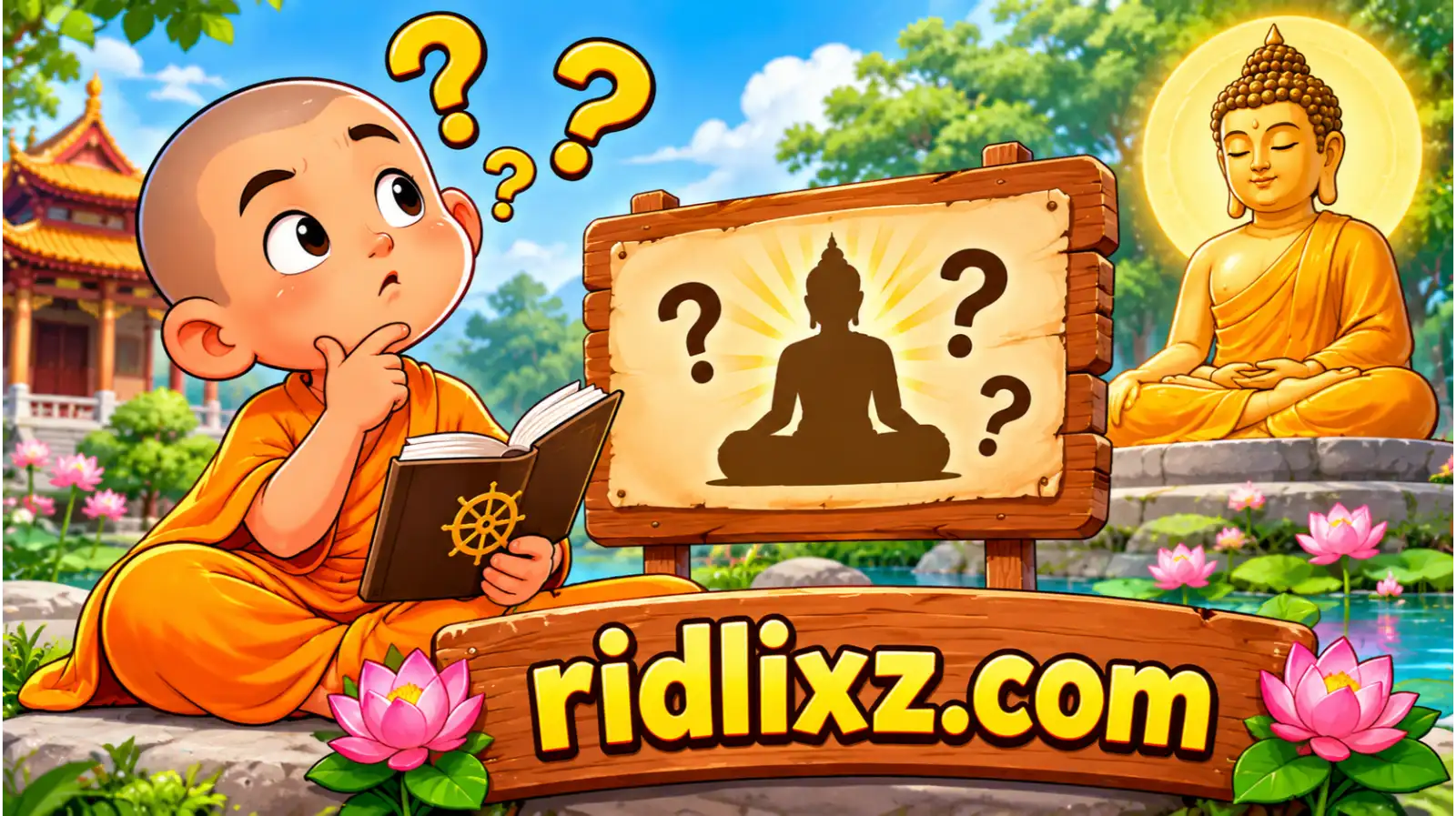
Buddhist riddles offer a fun way to explore wisdom, mindfulness, patience, compassion, and the mysteries of life. Unlike ordinary puzzles that rely on tricky words or surprising punchlines, these thoughtful brain teasers encourage you to look beyond the obvious. Some challenge your understanding of Buddhist teachings, while others explore meditation, karma, the nature of the mind, and the journey toward enlightenment.
Whether you’re interested in Buddhism, enjoy philosophical questions, or simply love solving clever riddles, this collection has something for you. You’ll discover easy Buddhist riddles for beginners, challenging Zen-inspired puzzles, questions about the Four Noble Truths, and playful brain teasers about monks and meditation.
Each riddle includes an answer, so you can test your thinking before checking the solution. Take your time, consider the clues, and remember that sometimes the most meaningful answer comes from looking at a question differently. Ready to exercise your mind and discover a little wisdom along the way?
💡 Did You Know?
- Buddhism’s Four Noble Truths: These teachings address suffering, its causes, its cessation, and the path leading to its cessation.
- The Middle Way: Buddhist teachings emphasize avoiding extremes, particularly in the pursuit of spiritual development.
- Mindfulness: Mindfulness is an important part of Buddhist practice and involves paying attention to present experiences.
🎯 Riddle of the Day
– A quiet traveler walks without a sound,
Seeking the peace that cannot be found.
The more he releases, the lighter he’ll be,
What kind of journey sets the mind free?
Guess the answer before revealing it!
Answer: The journey toward enlightenment.
Easy Buddhist Riddles for Beginners
These simple Buddhist riddles introduce familiar ideas about peace, kindness, wisdom, and mindfulness. They’re perfect for beginners and anyone who enjoys gentle brain teasers.
– No hands can hold me, yet I calm the heart.
I grow when anger and worries depart.
Though life gets noisy, I help you stay still.
What am I that brings quiet at will?
Answer: Inner peace.
– A tiny action can travel far,
Like ripples spreading from a stone in a jar.
Good or harmful, my effects may appear.
What Buddhist idea makes this clear?
Answer: Karma.
– I need no shoes to take you away,
Yet I begin wherever you stay.
Observe each breath and let thoughts pass through.
What peaceful practice can you do?
Answer: Meditation.
– The more you share, the more I grow.
A gentle gift wherever you go.
I ask for nothing in return.
What valuable quality can you learn?
Answer: Generosity.
– I cannot be purchased or placed in a chest.
I help you understand what is best.
Beyond mere facts, I guide what you do.
What quality helps you see clearly through?
Answer: Wisdom.
– No angry words can make me stay.
I disappear when kindness finds its way.
I soften hearts without a fight.
What feeling replaces hatred with light?
Answer: Compassion.
– I rise and fall without a sound.
Notice my movement as thoughts gather around.
Follow my rhythm, both gentle and deep.
What keeps you present when you sit and keep?
Answer: Your breath.
– I have no permanent shape or name.
I change with time, yet appear the same.
Buddhist teachings ask you to see through my disguise.
What changing nature explains life’s surprise?
Answer: Impermanence.
Buddhist Riddles About Meditation and Mindfulness
Meditation and mindfulness encourage awareness of the present moment. These riddles explore concentration, breathing, silence, and the wandering mind.
– No road leads to me, yet I can be near.
When attention wanders, I help make things clear.
Watch every moment without rushing ahead.
What practice keeps awareness widespread?
Answer: Mindfulness.
– I travel from thought to thought all day.
Sometimes I worry, sometimes I play.
Meditation teaches you to watch my flight.
What am I that can change with insight?
Answer: The mind.
– I enter with ease and leave without sound.
When you observe me, calm can be found.
You cannot keep me forever in place.
What natural rhythm deserves your attention and grace?
Answer: Breathing.
– The room may be noisy, yet I can remain.
I am not silence that comes from no sound or pain.
When thoughts settle, I become more clear.
What peaceful state can meditation bring near?
Answer: Mental stillness.
– I arrive without knocking and often disappear.
Some people chase me, others hold me near.
Watch me arise without letting me lead.
What passing visitor does the mind often feed?
Answer: A thought.
– I need no clock to mark my stay.
I bring your attention to what happens today.
Yesterday’s regrets and tomorrow’s fears fade.
What present-focused habit can be made?
Answer: Living mindfully.
– Sit without running, observe without blame.
Your body stays still while thoughts play their game.
No prize is required for this quiet art.
What practice gives attention a fresh start?
Answer: Meditation.
– I can be gentle, yet difficult to tame.
I jump between memories and plans without shame.
Patient observation can help me slow.
What restless visitor do meditators know?
Answer: The wandering mind.
Zen Buddhist Riddles and Thought-Provoking Questions
Zen-inspired riddles encourage readers to question assumptions and explore different perspectives. Some are playful paradoxes rather than puzzles with strictly logical answers.
– Before you can catch me, I am already gone.
You cannot hold yesterday or tomorrow for long.
Only by noticing what happens right now
Can you understand me somehow.
Answer: The present moment.
– A bell rings once, but where does its sound go?
It fills the air, then fades down below.
Though nothing remains that your hands can seize,
What taught you something without words or keys?
Answer: The experience of impermanence.
– Two people look at the very same tree.
One sees a shelter; one sees a place to be free.
The tree has not changed, yet their views disagree.
What shapes the world differently?
Answer: Perspective.
– The more you try to force me, the less I appear.
When you stop chasing, I may become clear.
No amount of shouting can make me arrive.
What peaceful condition helps the mind thrive?
Answer: Calmness.
– A question has no answer you can write on a page.
It makes you look beyond ordinary knowledge and age.
Zen teachers sometimes use such a test.
What is this unusual mental quest?
Answer: A koan.
– I am empty, yet nothing is missing.
Look beyond labels and ordinary wishing.
My meaning is deeper than an empty space.
What Buddhist idea invites this change of place?
Answer: Emptiness (Śūnyatā).
– The harder you cling, the heavier I grow.
Release your grip and watch me go.
I turn small worries into chains.
What habit creates unnecessary pains?
Answer: Attachment.
– A teacher may ask without explaining why.
The answer may change how you see the sky.
Don’t rush to solve what challenges your view.
What kind of puzzle invites insight from you?
Answer: A Zen riddle or koan.
Buddhist Riddles About Karma and Life
Karma is an important concept in Buddhist teachings. These riddles explore actions, intentions, consequences, and the choices that shape everyday life.
– I follow your actions, though I make no sound.
My consequences may eventually come around.
I am not a judge with a book of blame.
What principle gives this idea its name?
Answer: Karma.
– A kind word is planted, a friendship may grow.
A cruel act can bring trouble you know.
What principle reminds you to consider what you do?
Answer: Cause and effect.
– I cannot be seen, but I shape what you choose.
I may be wholesome or something to lose.
Before every action, I quietly start.
What gives your behavior its direction and heart?
Answer: Intention.
– I change every season, every hour, every day.
No matter how tightly you hold, I slip away.
Buddhist wisdom teaches not to depend on my stay.
What natural truth am I?
Answer: Impermanence.
– I can make a small problem feel wide.
I grow when desire becomes my guide.
Letting go can loosen my hold.
What feeling makes ordinary life difficult to hold?
Answer: Craving.
– You cannot undo me once I am done.
Yet future choices are never fully gone.
Learn from the past and act with care.
What part of life gives you a new chance to prepare?
Answer: The present moment.
– I am not a treasure you keep in a safe.
I grow through actions that others can face.
A helpful deed can leave a lasting trace.
What makes kindness meaningful in every place?
Answer: Wholesome action.
– I may bring sorrow when you demand things stay.
I become weaker when you stop forcing your way.
Understanding my roots can help you find release.
What human experience does Buddhism examine to find peace?
Answer: Suffering (Dukkha).
Buddhist Riddles About Monks and Monasteries
Monks, monasteries, robes, and daily spiritual practices provide plenty of inspiration for thoughtful riddles. Try these lighthearted puzzles about monastic life.
– I cover a monk but never hide his face.
My simple folds belong to a humble place.
I am worn with care, not fashion or pride.
What garment do Buddhist monks often wear with pride?
Answer: A monk’s robe.
– My walls are quiet, my halls are still.
Visitors arrive to reflect and fulfill
A search for wisdom away from the crowd.
What peaceful building stands humble and proud?
Answer: A monastery.
– I make a sound that carries through the air.
People may hear me and pause for prayer.
A monk may strike me to mark the day.
What instrument rings in a Buddhist way?
Answer: A temple bell.
– I am a bowl that holds a simple meal.
I remind the user that needs need not be ideal.
A monk may carry me from place to place.
What useful object belongs to this practice and space?
Answer: An alms bowl.
– I wake before the busy town.
My quiet steps rarely make a sound.
I may spend the morning in thoughtful prayer.
Who follows a spiritual path with care?
Answer: A Buddhist monk.
– I need no expensive decoration to shine.
I hold a place for a peaceful design.
A person may sit before me and reflect.
What sacred building can visitors respectfully inspect?
Answer: A Buddhist temple.
– I have many pages but do not tell a tale.
My teachings help spiritual seekers prevail.
I hold ideas about wisdom and the way.
What collection of teachings can guide the day?
Answer: Buddhist scriptures.
– I am a path that asks for discipline and care.
I guide the mind through practice and awareness.
My destination is not a worldly prize.
What spiritual journey seeks liberation and insight?
Answer: The Buddhist path.
Buddhist Riddles About the Four Noble Truths
The Four Noble Truths are central to Buddhist teaching. These riddles offer a simple way to remember their basic themes.
– I describe a truth that everyone may face.
From loss to frustration, I appear in life’s race.
Recognizing me is where understanding can start.
Which Noble Truth gives suffering its part?
Answer: The First Noble Truth.
– I grow when desire refuses to rest.
Wanting more can disturb even the best.
Which Noble Truth explains the source of this pain?
Answer: The Second Noble Truth.
– When craving ends, freedom can appear.
A quieter way of living becomes clear.
Which Noble Truth describes suffering’s release?
Answer: The Third Noble Truth.
– I offer a way with guidance and care.
Right understanding and conduct are there.
Which Noble Truth explains the path to follow?
Answer: The Fourth Noble Truth.
– I guide your understanding of what is right.
I help you recognize things with insight.
Which part of the Noble Eightfold Path am I?
Answer: Right View.
– My words should be truthful, kind, and clear.
I avoid harmful speech and unnecessary fear.
Which path factor guides what you say?
Answer: Right Speech.
– I help you choose actions that do no harm.
Compassion and ethics are part of my charm.
Which path factor guides your behavior?
Answer: Right Action.
– I am the journey’s practical guide.
Eight connected factors walk side by side.
I help people understand suffering and its end.
What Buddhist teaching do I represent, friend?
Answer: The Noble Eightfold Path.
Buddhist Riddles About Compassion and Kindness
Compassion is a meaningful theme in Buddhist practice. These riddles celebrate generosity, loving-kindness, patience, and caring for others.
– I give without counting what comes back.
I help someone else stay on track.
No expensive gift is needed to start.
What quality comes from a generous heart?
Answer: Generosity.
– I feel another person’s pain without taking their place.
I inspire helpful actions and a kinder face.
I ask you to care instead of turn away.
What quality can brighten someone’s day?
Answer: Compassion.
– I wish others happiness without needing a reward.
I am cultivated through practice, not stored in a cupboard.
Buddhist teachings give me an important role.
What loving quality warms the soul?
Answer: Loving-kindness (Metta).
– I stop harsh words before they begin.
I help you forgive and make peace within.
I am not weakness, though I may seem mild.
What strength keeps anger from becoming wild?
Answer: Patience.
– I can be offered to a stranger or friend.
My value does not depend on what you spend.
I may be a smile, a meal, or a hand.
What simple action helps people understand?
Answer: Kindness.
– I ask you to listen before you reply.
I leave room for another person’s cry.
I help disagreements become less severe.
What quality makes understanding more clear?
Answer: Empathy.
– I do not need a reason to wish others well.
I grow when bitter feelings begin to quell.
I spread warmth without needing fame.
What positive intention carries this name?
Answer: Goodwill.
– I soften the heart but do not erase the truth.
I guide thoughtful action from childhood to youth.
I can be shown through words or deeds.
What quality responds to another person’s needs?
Answer: Compassionate care.
Challenging Buddhist Riddles for Deep Thinkers
Ready for something more difficult? These philosophical riddles explore identity, consciousness, attachment, and the nature of reality.
– My body changes, my thoughts rearrange.
My feelings and memories are never the same.
Yet people call me one permanent thing.
What Buddhist teaching questions this naming?
Answer: Non-self (Anatta).
– I appear when conditions come together.
I cannot exist independently forever.
From a simple flower to a passing breeze,
What Buddhist principle explains dependencies like these?
Answer: Dependent origination.
– I am not a place you can reach by train.
Nor am I a prize that belongs to the sane.
I describe freedom from craving’s hold.
What spiritual goal is this often told?
Answer: Nirvana (Nibbana).
– I may look solid, yet change underneath.
Search for a permanent core and you may find none.
My meaning is subtle, not simply a void.
What Buddhist idea challenges what the mind has enjoyed?
Answer: Emptiness (Śūnyatā).
– Five groups describe experience and identity.
They include form, feeling, perception, mental formations, and consciousness.
Together they help explain what people call a self.
What Buddhist teaching places these groups on the shelf?
Answer: The Five Aggregates (Skandhas).
– I am a cycle of birth, death, and rebirth.
I describe continued wandering through worldly existence on Earth.
Freedom from my repeating flow is a spiritual aim.
What Buddhist concept carries this name?
Answer: Samsara.
– I am not simply knowledge gathered from a book.
I change how reality is understood when you look.
I help reveal the nature of things as they are.
What quality lets understanding travel far?
Answer: Insight (Prajna).
– I am a disciplined way to live and train.
I involve conduct, concentration, and wisdom gained.
Three parts work together as one.
What Buddhist training framework have I become?
Answer: The Threefold Training.
Funny Buddhist Riddles and Lighthearted Zen Puzzles
A little humor can make philosophical ideas easier to remember. These playful riddles bring monks, meditation, and everyday situations together without making fun of Buddhist beliefs.
– A monk sits quietly while his stomach starts to sing.
No meditation bell can stop that thing.
What interruption makes his peaceful session tough?
Answer: Hunger.
– I visit during meditation without an invitation.
I bring shopping lists and vacation imagination.
The monk notices me and lets me depart.
What unwanted visitor appears in the mind’s heart?
Answer: A distracting thought.
– A monk tries to stay calm while a mosquito lands.
He watches it carefully instead of waving his hands.
What practice is being tested that day?
Answer: Patience and mindfulness.
– I have no legs, yet I can make you run.
I appear in your head when meditation has begun.
You follow me until you forget where you are.
What mental traveler can wander so far?
Answer: A wandering thought.
– A monk owns very little but keeps one thing near.
It helps him sit comfortably year after year.
What simple object supports his quiet routine?
Answer: A meditation cushion.
– The meditation hall is quiet, the teacher looks wise.
One student opens a snack bag and attracts every eye.
What little sound interrupts the peaceful air?
Answer: Crinkling snack packaging.
– I can be very loud without making a sound.
I fill your head when worries come around.
A moment of mindfulness can help me slow.
What noisy visitor do many people know?
Answer: An overactive mind.
– A monk watches the clock but refuses to complain.
He waits for the meal with remarkable restraint.
What practice does his hungry patience show?
Answer: Self-discipline.
Buddhist Riddles for Kids and Families
These easy, family-friendly Buddhist riddles introduce children to kindness, peace, nature, and positive actions. They can also be used for simple learning activities.
– I bloom in a pond but stay clean and bright.
My petals open in the morning light.
Buddhist art often gives me a special role.
What flower represents purity and growth?
Answer: The lotus.
– I am small but can travel far.
Throw a stone in water and see where ripples are.
My lesson reminds us that actions have effects.
What simple idea does this object reflect?
Answer: Cause and effect.
– I have no voice, yet I can teach.
Sit beside me and notice what you reach.
I grow in nature without a word.
What peaceful place can help your mind be heard?
Answer: A garden.
– I am a wish for someone to feel good.
I can be shared in every neighborhood.
A smile or kind word can help me appear.
What lovely feeling brings people near?
Answer: Goodwill.
– I have petals but am not a rose.
I open slowly as the warm sunlight glows.
Buddhist stories and artwork often show my face.
What flower is linked with wisdom and grace?
Answer: The lotus flower.
– I cannot be seen, but you can hear my song.
I remind you to pause when the day feels long.
A monk may use me to mark meditation time.
What instrument makes this gentle chime?
Answer: A bell.
– I am a simple action that costs no money.
I can make someone’s difficult day sunny.
Hold a door or share a smile.
What kind of behavior makes life worthwhile?
Answer: Kindness.
– I grow when you learn and share what you know.
I help your understanding steadily grow.
I am more than remembering a fact.
What quality helps you think and act?
Answer: Wisdom.
How to Use Buddhist Riddles in Everyday Activities
Buddhist riddles can be more than entertainment. They can also create opportunities for reflection, discussion, and learning.
- For family activities: Share easy riddles about kindness, patience, and nature, then let everyone guess the answers.
- For meditation groups: Use a thoughtful question as a discussion starter after a meditation session.
- For classrooms: Introduce basic concepts such as mindfulness, compassion, and impermanence through simple puzzles.
- For social media: Post one riddle without its answer and invite followers to share their guesses.
- For personal reflection: Choose a philosophical riddle and spend a few minutes considering what its answer means in everyday life.
Remember that a riddle can introduce an idea, but it should not replace learning about Buddhist teachings from reliable sources or qualified teachers.
FAQs:
1. What are Buddhist riddles?
Buddhist riddles are thoughtful puzzles inspired by Buddhist teachings, including mindfulness, compassion, karma, meditation, and enlightenment.
2. What is a Zen riddle?
A Zen riddle, often called a koan, is a question or story used in Zen practice to challenge ordinary ways of thinking and encourage insight.
3. Are Buddhist riddles suitable for children?
Yes, simple riddles about kindness, patience, peace, and nature can introduce children to basic Buddhist-inspired ideas.
4. What is the most important lesson in Buddhist riddles?
Many Buddhist-inspired riddles encourage self-awareness, compassion, wisdom, non-attachment, and a better understanding of life’s changing nature.
5. What is karma in Buddhist teachings?
Karma refers to intentional actions and their consequences, with particular importance placed on the intentions behind those actions.
6. Do all Buddhist riddles have one correct answer?
No, some are ordinary puzzles with clear solutions, while Zen-inspired questions may encourage deeper reflection rather than a single fixed answer.
Conclusion:
Buddhist riddles offer an enjoyable way to explore meaningful ideas while giving your mind a little exercise. From easy puzzles about kindness and meditation to challenging questions about karma, impermanence, and enlightenment, each riddle invites you to think beyond the obvious. You can share these brain teasers with friends, use them in learning activities, or simply enjoy a quiet moment of reflection. Remember, wisdom isn’t always about finding an immediate answer; sometimes, asking a thoughtful question is just as valuable. Which Buddhist riddle was your favorite? Share it with a friend and see whether they can solve it!
Is this conversation helpful so far?
