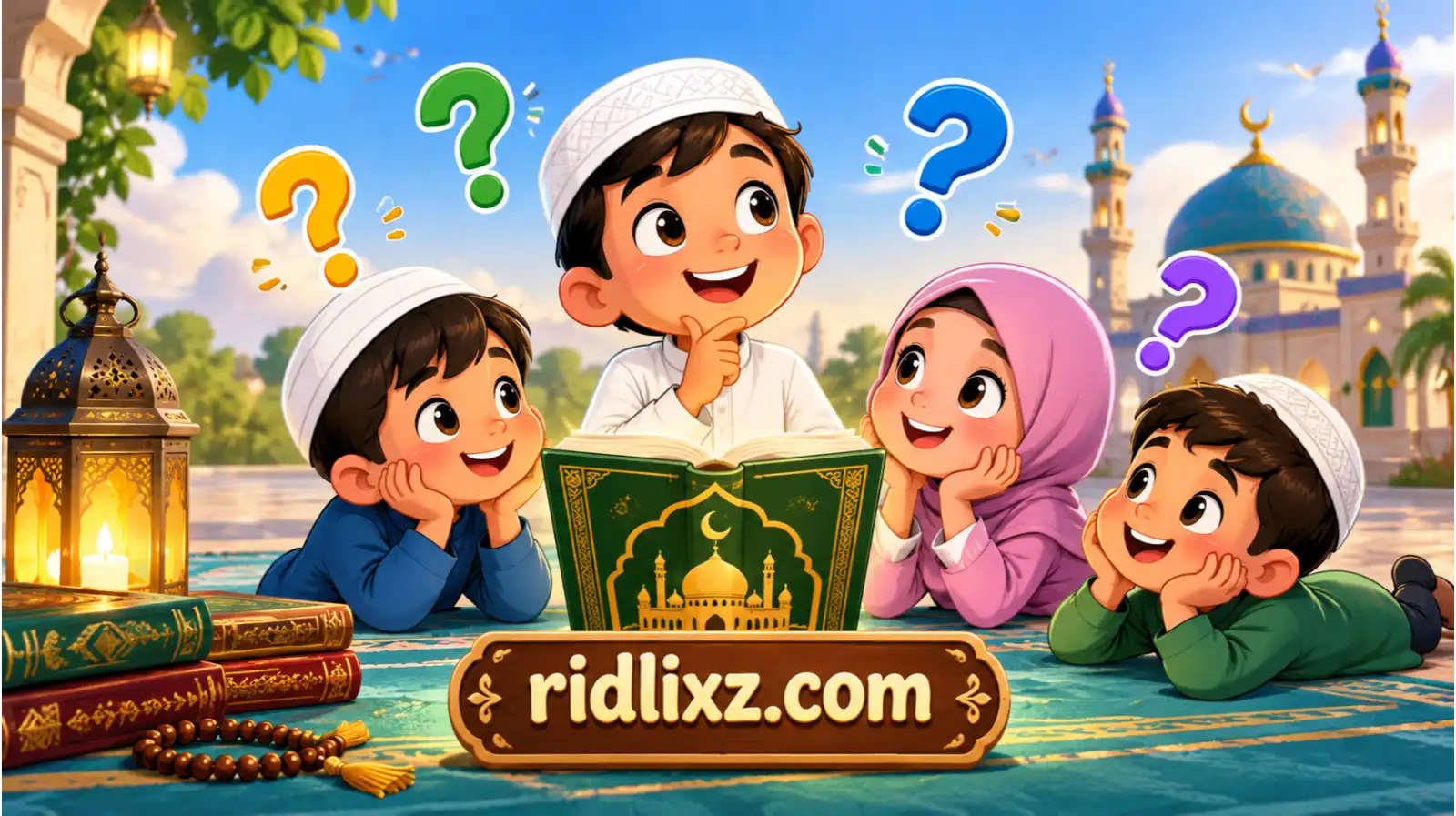
Islamic riddles are a fun way to explore Islamic knowledge, reflect on important teachings, and challenge friends and family with thoughtful questions. Whether you’re looking for simple questions for children, Islamic quiz ideas for Ramadan, or more challenging brain teasers about the Quran and prophets, this collection offers something for different ages and knowledge levels.
These Islamic riddles cover topics such as the Five Pillars of Islam, daily prayers, fasting, Hajj, Islamic months, mosques, and the lives of prophets mentioned in the Quran. Some questions test basic knowledge, while others encourage you to think carefully about familiar religious concepts.
You can use these questions during family gatherings, Islamic school activities, community events, or a friendly quiz after iftar. Each riddle includes an answer so you can check your knowledge as you go. Try to solve each one before looking at the solution, and remember that the goal is to learn something meaningful while enjoying the challenge.
Ready to begin? Start with the daily riddle, then work through the easy questions before moving on to the more challenging ones.
💡 Did You Know?
- The Quran is divided into 114 surahs, commonly translated as chapters.
- Muslims observe five obligatory daily prayers, known as Fajr, Dhuhr, Asr, Maghrib, and Isha.
- Ramadan is the ninth month of the Islamic lunar calendar and is associated with fasting from dawn until sunset for Muslims who are obligated to fast.
🎯 Riddle of the Day
At dawn I begin, at sunset I end,
With patience and prayer, I help hearts mend.
For a month each year, I shape the day;
What sacred practice am I, can you say?
Guess before you reveal the answer!
Answer: Fasting during Ramadan.
Easy Islamic Riddles for Beginners
These beginner-friendly questions are ideal for children, new learners, and anyone who wants to review basic Islamic knowledge.
- Five times each day, Muslims turn to worship. What regular act of devotion is this?Answer: Salah (prayer).
- I am the holy book Muslims recite and study, containing guidance revealed to Prophet Muhammad. What am I?Answer: The Quran.
- I am the month when Muslims fast from dawn until sunset and many gather for special night prayers. Which month am I?Answer: Ramadan.
- Muslims travel to Makkah to perform me when they are able. I take place during a particular month of the Islamic calendar. What am I?Answer: Hajj.
- I am the declaration of faith that affirms belief in Allah and the prophethood of Muhammad. What am I called?Answer: Shahada.
- Before certain acts of worship, Muslims perform a ritual washing. What is this preparation called?Answer: Wudu.
- I am the building where Muslims commonly gather for congregational prayer. What am I?Answer: A mosque (masjid).
- After a day of fasting, Muslims traditionally break their fast at sunset. What is this meal or moment called?Answer: Iftar.
- Muslims give me as an obligatory form of charity when they meet the relevant conditions. What am I?Answer: Zakat.
- I am the greeting Muslims often exchange, asking for peace upon one another. What greeting am I?Answer: Assalamu alaikum.
Islamic Riddles About the Quran
Test your knowledge of the Quran with these questions about its structure, revelation, and well-known features.
- I contain 114 chapters, and Muslims recite me in worship and study me for guidance. What book am I?Answer: The Quran.
- My name is associated with the opening of the Quran, and Muslims recite me in every unit of their daily prayers. Which surah am I?Answer: Surah Al-Fatihah.
- I am the longest surah in the Quran, and my name means “The Cow.” Which surah am I?Answer: Surah Al-Baqarah.
- I am the shortest surah in the Quran by the commonly counted number of verses, with only three. Which surah am I?Answer: Surah Al-Kawthar.
- I am the chapter whose name means “The Sincerity” or “Purity,” and I teaches the oneness of Allah. Which surah am I?Answer: Surah Al-Ikhlas.
- I am the angel who brought Allah’s revelations to the prophets, including Muhammad. Who am I?Answer: Jibril (Gabriel).
- I am the night described in the Quran as better than a thousand months. What am I called?Answer: Laylat al-Qadr (the Night of Decree).
- I am the first word traditionally identified in the opening revelation to Prophet Muhammad. What word am I?Answer: Iqra, meaning “Read” or “Recite.”
- I am a chapter named after a prophet who was swallowed by a great fish. Which surah am I?Answer: Surah Yunus.
- I am the chapter named after Maryam, the mother of Isa. Which surah am I?Answer: Surah Maryam.
Islamic Riddles About the Prophets
Explore stories of the prophets mentioned in Islamic teachings through these knowledge-based riddles.
- Allah commanded me to build an ark before a great flood. Which prophet am I?Answer: Prophet Nuh (Noah).
- My brothers threw me into a well, but Allah later raised my status in Egypt. Who am I?Answer: Prophet Yusuf (Joseph).
- I spoke to Allah and received revelation at Mount Sinai. Which prophet am I?Answer: Prophet Musa (Moses).
- A great fish swallowed me, and I called upon Allah in darkness. Which prophet am I?Answer: Prophet Yunus (Jonah).
- I was born miraculously to Maryam, and Allah gave me the ability to perform miracles by His permission. Who am I?Answer: Prophet Isa (Jesus).
- My father was Ibrahim, and Allah commanded a great test involving my willingness to be sacrificed. Which son am I in the Islamic account commonly associated with Eid al-Adha?Answer: Prophet Ismail (Ishmael).
- I was known for patience during severe trials and illness. Which prophet am I?Answer: Prophet Ayyub (Job).
- Allah gave me the ability to understand the speech of animals, and I was a king and prophet. Who am I?Answer: Prophet Sulayman (Solomon).
- I was sent to the people of ‘Ad and called them to worship Allah alone. Which prophet am I?Answer: Prophet Hud.
- I am the final prophet in Islam, and the Quran was revealed to me. Who am I?Answer: Prophet Muhammad (peace be upon him).
Islamic Riddles About Ramadan and Fasting
These riddles are useful for Ramadan activities, family quizzes, and learning about the practices of the holy month.
- Before dawn, some fasting Muslims eat a meal to prepare for the day. What is this meal called?Answer: Suhoor (also called Sehri in South Asia).
- The sun sets, and the day’s fast comes to an end. What is the evening meal called?Answer: Iftar.
- I am a special night in Ramadan associated with the Quran’s revelation and immense spiritual significance. What am I?Answer: Laylat al-Qadr.
- During Ramadan, Muslims may gather after Isha for additional congregational prayers. What are these prayers commonly called?Answer: Taraweeh.
- I am the celebration that marks the end of Ramadan and begins on the first day of Shawwal. Which festival am I?Answer: Eid al-Fitr.
- I am the act of refraining from food, drink, and other things that invalidate the fast from dawn until sunset. What am I?Answer: Sawm (fasting).
- I appear in the sky and help mark the beginning and end of Islamic lunar months. What am I?Answer: The crescent moon.
- I am the month immediately after Ramadan, and my first day marks Eid al-Fitr. Which month am I?Answer: Shawwal.
- Muslims sometimes give me to help people in need before the Eid prayer at the end of Ramadan. What am I?Answer: Zakat al-Fitr.
- I am a voluntary act of worship that many Muslims increase during Ramadan, especially through reciting the Quran. What am I?Answer: Quran recitation.
Islamic Riddles About Salah and Worship
Discover the details of Islamic worship with these riddles about prayer, purification, and devotion.
- I begin before the sun rises and am the first of the five obligatory daily prayers. What am I?Answer: Fajr.
- I am the midday prayer, performed after the sun passes its highest point. Which prayer am I?Answer: Dhuhr.
- My time begins in the afternoon, and I am the third of the five daily prayers. What am I?Answer: Asr.
- I take place just after sunset and have three obligatory rak’ahs. Which daily prayer am I?Answer: Maghrib.
- I am the night prayer and the final one among the five obligatory daily prayers. What am I?Answer: Isha.
- During prayer, Muslims bow with their hands on their knees. What is this position called?Answer: Ruku.
- In prayer, Muslims place their foreheads on the ground in humble submission. What is this position called?Answer: Sujud (prostration).
- I indicate the direction Muslims face during salah, toward the Kaaba in Makkah. What am I?Answer: The Qibla.
- I am the call announcing that the time for congregational prayer has arrived. What am I called?Answer: Iqamah.
- I am the person who leads others in congregational prayer. Who am I?Answer: The imam.
Islamic Riddles About Hajj and the Kaaba
Learn about the pilgrimage to Makkah and the important places and practices associated with Hajj.
- Muslims face me during prayer, and pilgrims circle around me during tawaf. What am I?Answer: The Kaaba.
- During Hajj and Umrah, pilgrims walk around the Kaaba seven times. What is this ritual called?Answer: Tawaf.
- Pilgrims travel repeatedly between two hills near the Kaaba, remembering Hajar’s search for water. What is this ritual called?Answer: Sa’i.
- I am the plain where pilgrims gather on the ninth day of Dhul-Hijjah for a central rite of Hajj. What place am I?Answer: Arafat.
- I am the special clothing worn by male pilgrims during Hajj and Umrah, consisting of two simple, unstitched cloths. What am I called?Answer: Ihram.
- I am the well near the Kaaba associated with the story of Hajar and Ismail. What am I called?Answer: Zamzam.
- I am the festival celebrated on the tenth day of Dhul-Hijjah, associated with sacrifice and Prophet Ibrahim’s test. Which festival am I?Answer: Eid al-Adha.
- Pilgrims travel to me in Saudi Arabia to perform Hajj, one of Islam’s Five Pillars. Which city am I?Answer: Makkah.
- I am the valley where pilgrims stay overnight during part of Hajj and where stones are collected for the stoning ritual. What place am I?Answer: Muzdalifah.
- I am the act of casting pebbles at designated pillars or walls during Hajj, symbolizing rejection of evil. What ritual am I?Answer: Rami al-Jamarat.
Islamic Riddles About Islamic History
These questions cover key people, events, and places from early Islamic history.
- I was the first wife of Prophet Muhammad and the first person to believe in his prophethood. Who am I?Answer: Khadijah bint Khuwaylid.
- I was the close companion of Prophet Muhammad and the first caliph after his death. Who am I?Answer: Abu Bakr as-Siddiq.
- I was the second caliph and was known by the title Al-Faruq. Who am I?Answer: Umar ibn al-Khattab.
- I was the third caliph and helped establish a standardized written text of the Quran for distribution. Who am I?Answer: Uthman ibn Affan.
- I was the cousin and son-in-law of Prophet Muhammad and became the fourth caliph. Who am I?Answer: Ali ibn Abi Talib.
- I am the city to which Prophet Muhammad migrated from Makkah, an event that marks the beginning of the Hijri calendar era. Which city am I?Answer: Madinah.
- I am the migration of Prophet Muhammad and his companions from Makkah to Madinah. What is this event called?Answer: The Hijrah.
- I am the first mosque built by Prophet Muhammad after his migration, located near Madinah. What am I called?Answer: Quba Mosque.
- I am the treaty concluded between Prophet Muhammad and the Quraysh of Makkah in the sixth year after the Hijrah. What am I called?Answer: The Treaty of Hudaybiyyah.
- I am the first major battle fought by the early Muslim community against the Quraysh. What battle am I?Answer: The Battle of Badr.
Islamic Riddles for Kids
These simple riddles use familiar ideas and gentle clues to help children learn about Islam.
- I have a minaret in many designs, and people gather inside me to pray. What am I?Answer: A mosque.
- I am a special book that Muslims handle with respect and recite for guidance. What am I?Answer: The Quran.
- I am a kind word Muslims say when thanking Allah for a blessing. What word am I?Answer: Alhamdulillah.
- When someone sneezes, a Muslim may say a prayer asking Allah to show mercy. What phrase is commonly said?Answer: Yarhamuk Allah, said in response to “Alhamdulillah” from the person who sneezed.
- I am a phrase Muslims say before beginning many everyday tasks, remembering Allah. What am I?Answer: Bismillah.
- I am the prophet who built an ark to survive a flood. Who am I?Answer: Prophet Nuh.
- I am a month when Muslims try to do extra good deeds, fast, and read the Quran. Which month am I?Answer: Ramadan.
- I am the greeting that means “peace be upon you.” What am I?Answer: Assalamu alaikum.
- Muslims give me to help people in need, and I can include food, clothing, or money when given as charity. What am I?Answer: Sadaqah (voluntary charity).
- I am the festival that comes after Ramadan, when Muslims celebrate and share happiness with family and others. Which festival am I?Answer: Eid al-Fitr.
Challenging Islamic Riddles for Adults
These questions require a little more detailed knowledge of Islamic teachings and terminology.
- I am the Islamic month in which Hajj takes place, and my tenth day is Eid al-Adha. Which month am I?Answer: Dhul-Hijjah.
- I am the first month of the Islamic lunar calendar. What am I?Answer: Muharram.
- I am the Islamic month that comes immediately before Ramadan. Which month am I?Answer: Sha’ban.
- I am a chapter of the Quran whose name means “The Spider.” Which surah am I?Answer: Surah Al-Ankabut.
- I am the chapter that mentions the story of the People of the Cave, a group of young believers. Which surah am I?Answer: Surah Al-Kahf.
- I am the Arabic term for the oneness of Allah, a central belief in Islam. What am I?Answer: Tawhid.
- I am the collection of reports about the sayings, actions, and approvals of Prophet Muhammad. What am I called?Answer: Hadith.
- I am the scholarly effort to derive Islamic rulings from recognized sources and principles. What am I called?Answer: Ijtihad.
- I am the term for the consensus of qualified Muslims scholars on a legal matter in classical Islamic jurisprudence. What am I?Answer: Ijma.
- I am the voluntary night prayer often performed individually outside Ramadan, though it can also be offered in congregation. What am I commonly called?Answer: Tahajjud.
Islamic Riddles About Good Manners and Values
These riddles focus on ethical concepts emphasized in Islamic teachings.
- I mean speaking truthfully, even when lying might seem easier. Which virtue am I?Answer: Honesty (sidq).
- I mean treating parents with kindness, respect, and care. What value am I?Answer: Kindness and dutifulness toward parents (birr al-walidayn).
- I involve remaining steady and doing what is right when life becomes difficult. Which virtue am I?Answer: Sabr (patience).
- I mean placing trust in Allah while still making a sincere effort. What concept am I?Answer: Tawakkul.
- I am the act of forgiving someone rather than seeking revenge when forgiveness is appropriate. Which virtue am I?Answer: Forgiveness (‘afw).
- I mean giving quietly or openly to help people in need, seeking Allah’s pleasure. What act am I?Answer: Sadaqah.
- I am the quality of treating others fairly and giving everyone their due. Which virtue am I?Answer: Justice (‘adl).
- I mean being grateful for blessings instead of taking them for granted. What quality am I?Answer: Shukr (gratitude).
- I involve keeping a promise and fulfilling what you have agreed to do. Which quality am I?Answer: Trustworthiness (amanah).
- I mean avoiding arrogance and treating people with humility. What virtue am I?Answer: Humility (tawadu).
How to Use Islamic Riddles for Learning and Family Fun
Islamic riddles can turn revision into an enjoyable activity without making learning feel like a formal test.
- For children: Choose simple questions about prayer, Ramadan, prophets, and good manners. Offer hints instead of immediately revealing answers.
- For Ramadan gatherings: Read a riddle before iftar or use a few questions during a family quiz.
- For Islamic classrooms: Group riddles by topic and ask students to explain how they reached each answer.
- For family competitions: Let everyone write down an answer before discussing it together.
- For social media: Share one question at a time and reveal the answer in a follow-up post.
- For deeper learning: If a riddle concerns a Quranic verse, hadith, or historical event, consult a reliable Islamic source to explore the details.
Keep the activity welcoming. If someone gives an incorrect answer, use the opportunity to explain the concept kindly rather than turning the quiz into a test of faith.
FAQs:
What are Islamic riddles?
Islamic riddles are questions or brain teasers based on Islamic beliefs, worship, scripture, history, and values.
Are Islamic riddles suitable for children?
Yes, simple riddles about prophets, prayer, Ramadan, and good manners can be suitable for children when adapted to their ages and understanding.
Can I use Islamic riddles during Ramadan?
Yes, they can be used for family quizzes, classroom activities, community gatherings, and informal learning during Ramadan.
Do Islamic riddles have answers?
Most educational Islamic riddles include a specific answer, although questions involving scholarly interpretation may need additional context.
How can I make Islamic riddles more challenging?
Use questions about Quranic chapters, Islamic history, worship terminology, and the Islamic calendar, while checking the answers against reliable sources.
Are these riddles a substitute for Islamic teaching?
No, riddles are an informal learning activity and should not replace qualified guidance or reliable sources for religious rulings.
Conclusion:
Islamic riddles offer a simple way to combine learning, reflection, and friendly competition. From easy questions for children to challenging brain teasers about the Quran, prophets, Hajj, Islamic history, and good character, these questions can help families and learners revisit important concepts in an engaging format. Use them during Ramadan, in the classroom, or at your next family gathering, and take time to explore any answer that sparks curiosity. Which riddle was your favorite? Share it with a friend, challenge your family to solve it, and keep learning together.
